Thyroid ultrasound can measure the size of the thyroid gland and detect and monitor various pathological changes in this organ:
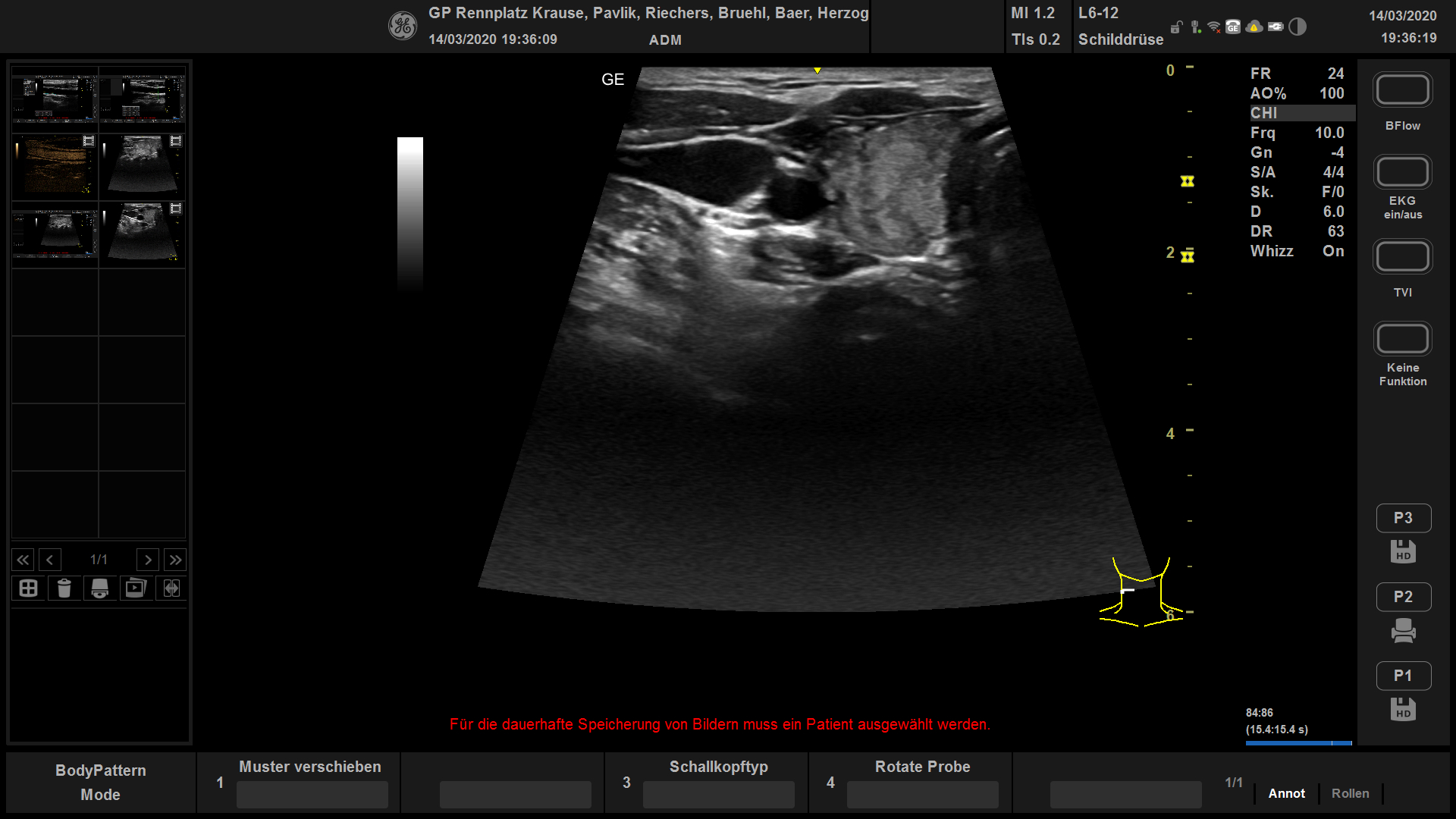
Goitre
A goitre is an enlargement of the whole thyroid gland or of parts of it. There are various causes of such an enlargement; the most common cause in Germany (Central Europe) is iodine deficiency.
Nodules in the thyroid
These are usually benign nodules (e.g. adenomas or nodules caused by iodine deficiency), and rarely malignant changes.
Cysts
A cyst is a cavity enclosed by a capsule with thick or thin fluid inside. Cysts can have one or several chambers.
Scar-like tissue changes
These indicate a possible autoimmune disease of the thyroid, such as Hashimoto’s thyroiditis or Graves’ disease.
Doppler ultrasound
Increased blood flow on Doppler ultrasound indicates inflammatory changes in the thyroid. Doppler ultrasound is also used to assess the blood flow of thyroid nodules in order to classify them more precisely.
Besides thyroid ultrasound and the doctor’s questions and examination, a blood test for thyroid hormones and, if necessary, certain proteins (antibodies) can be used to assess the thyroid. Further methods reserved for specific questions are scintigraphy (a nuclear medicine procedure that shows the local function of the thyroid) and fine-needle aspiration of the thyroid followed by microscopic examination of the tissue obtained.